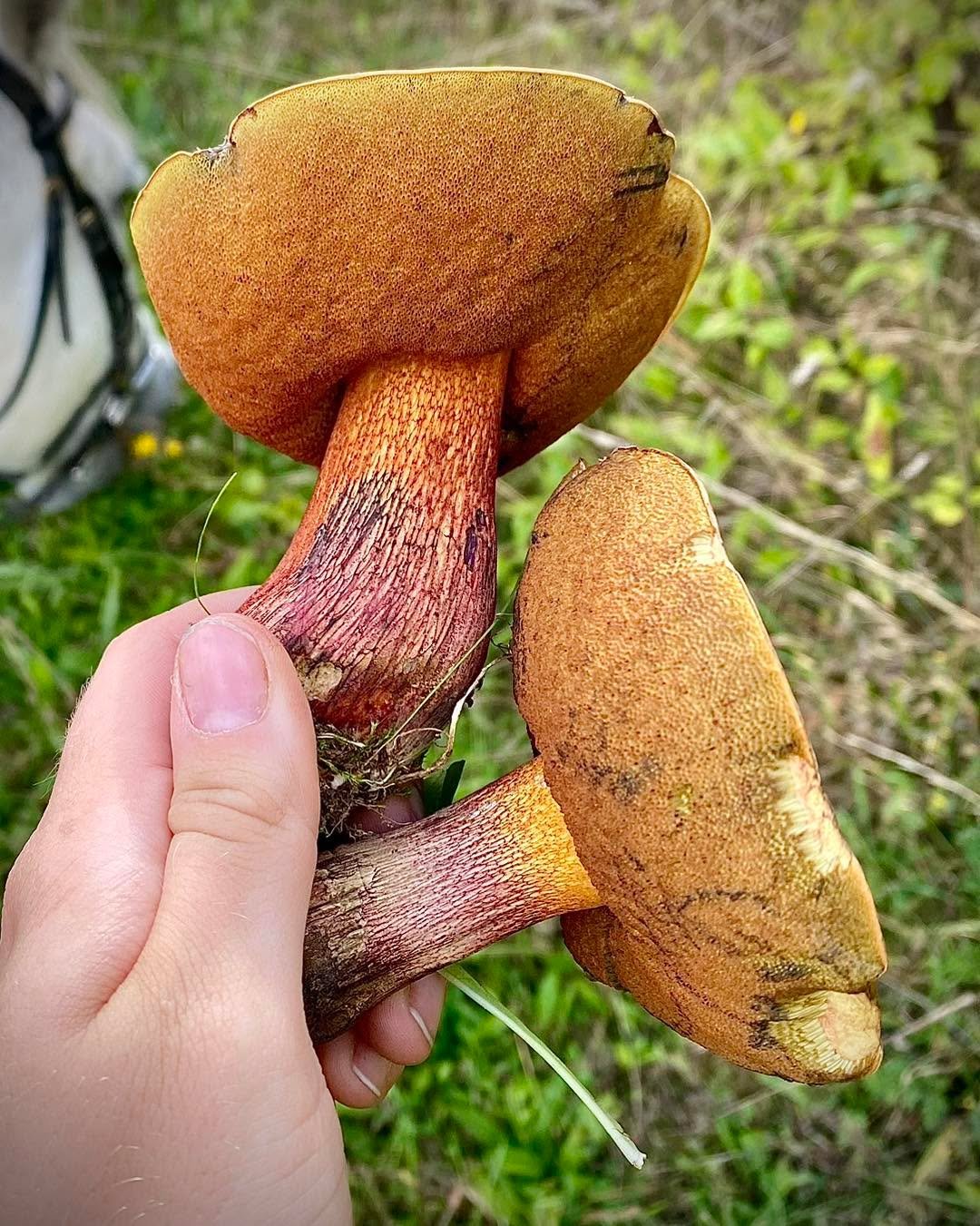
Suillellus luridus - lurid bolete 🍄🟫
My favourite bolete species, they’re beautiful and also incredibly variable 😄😄 here are some of my observations about them.
Notable features:
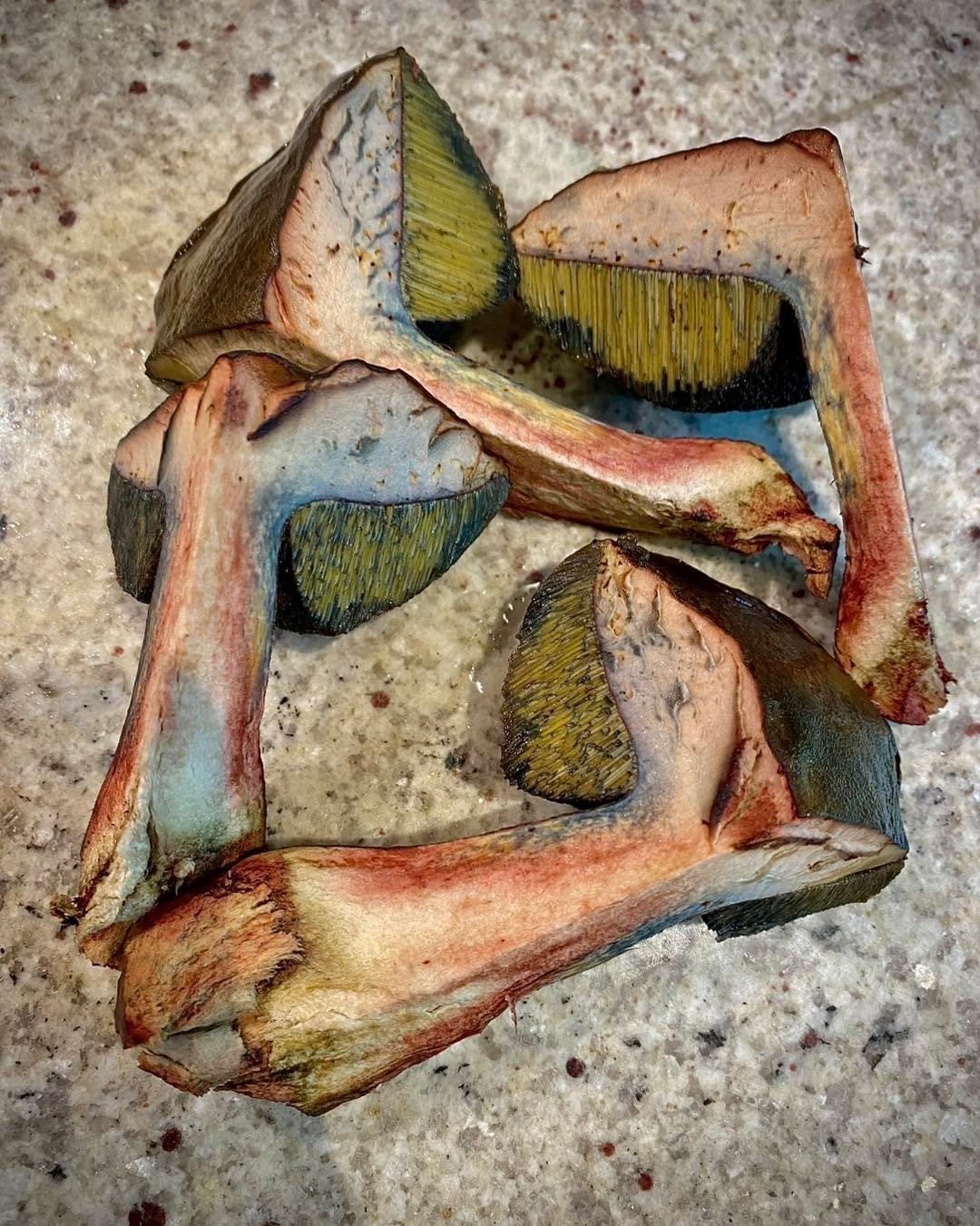
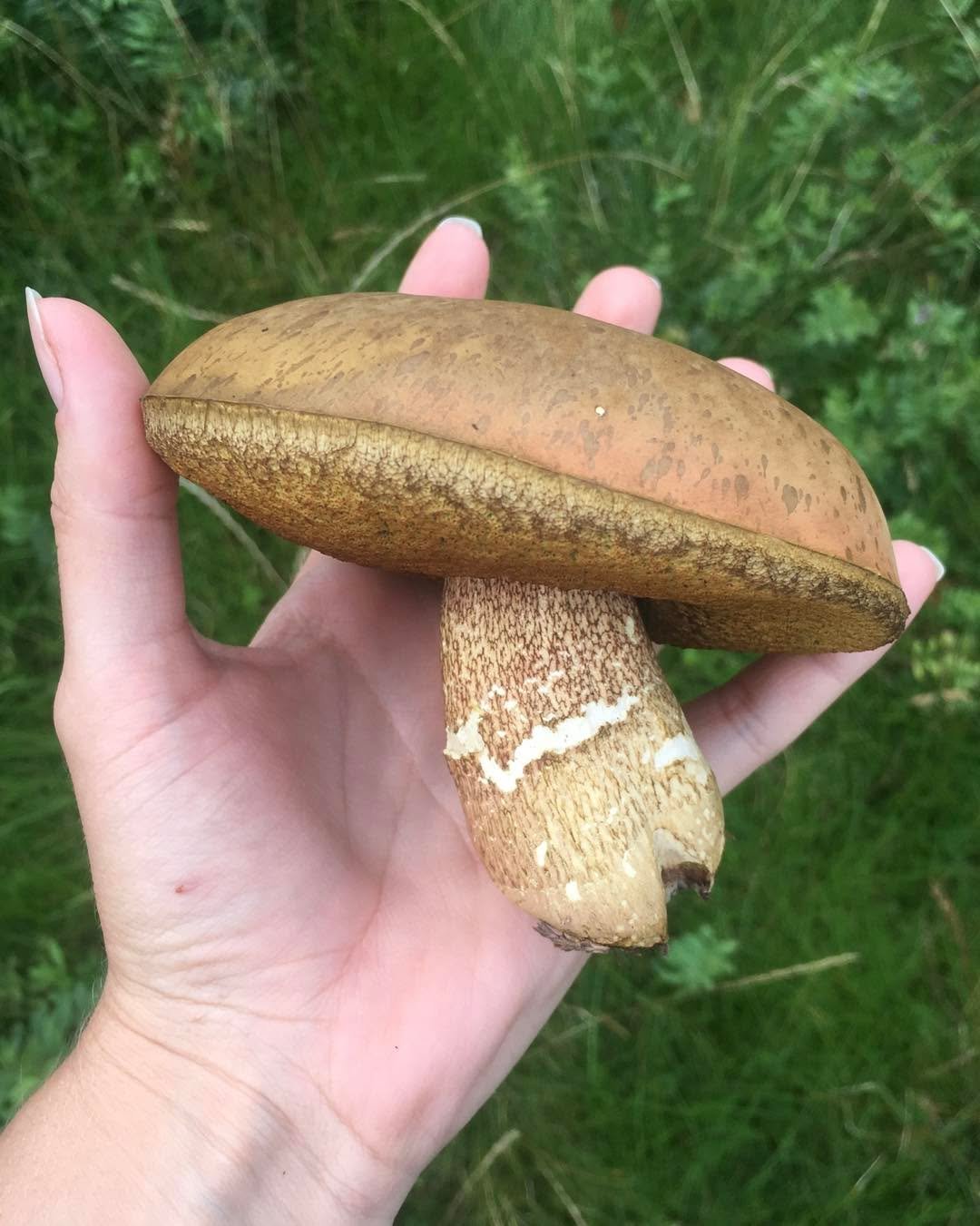
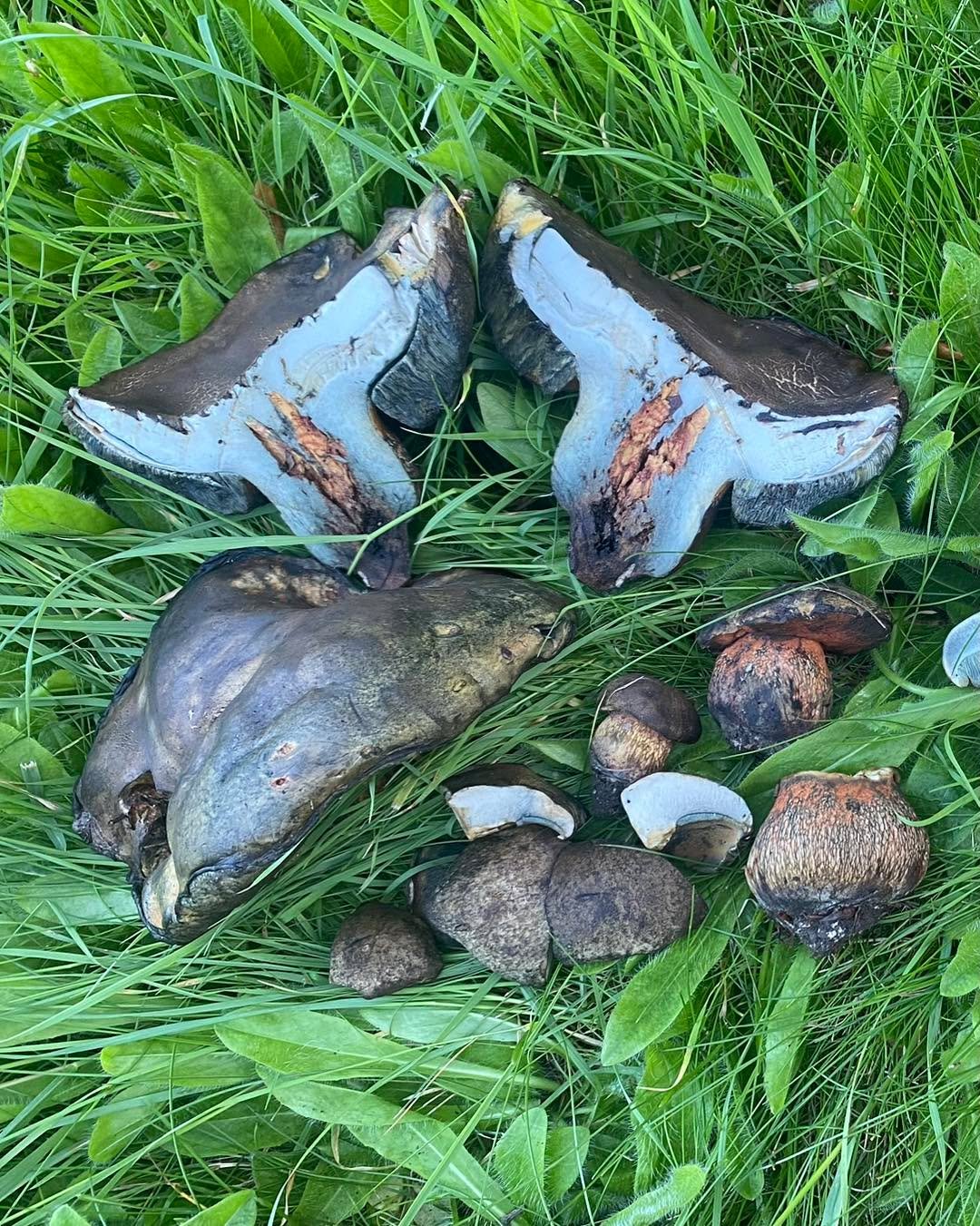
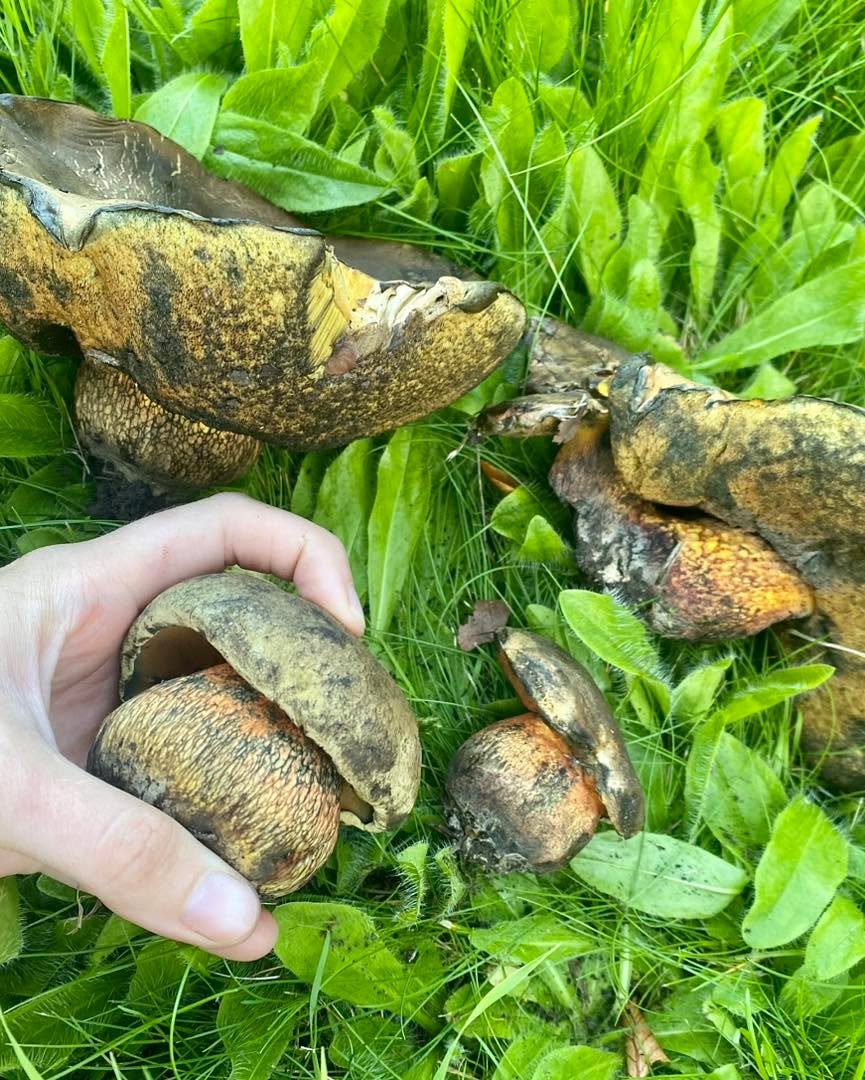
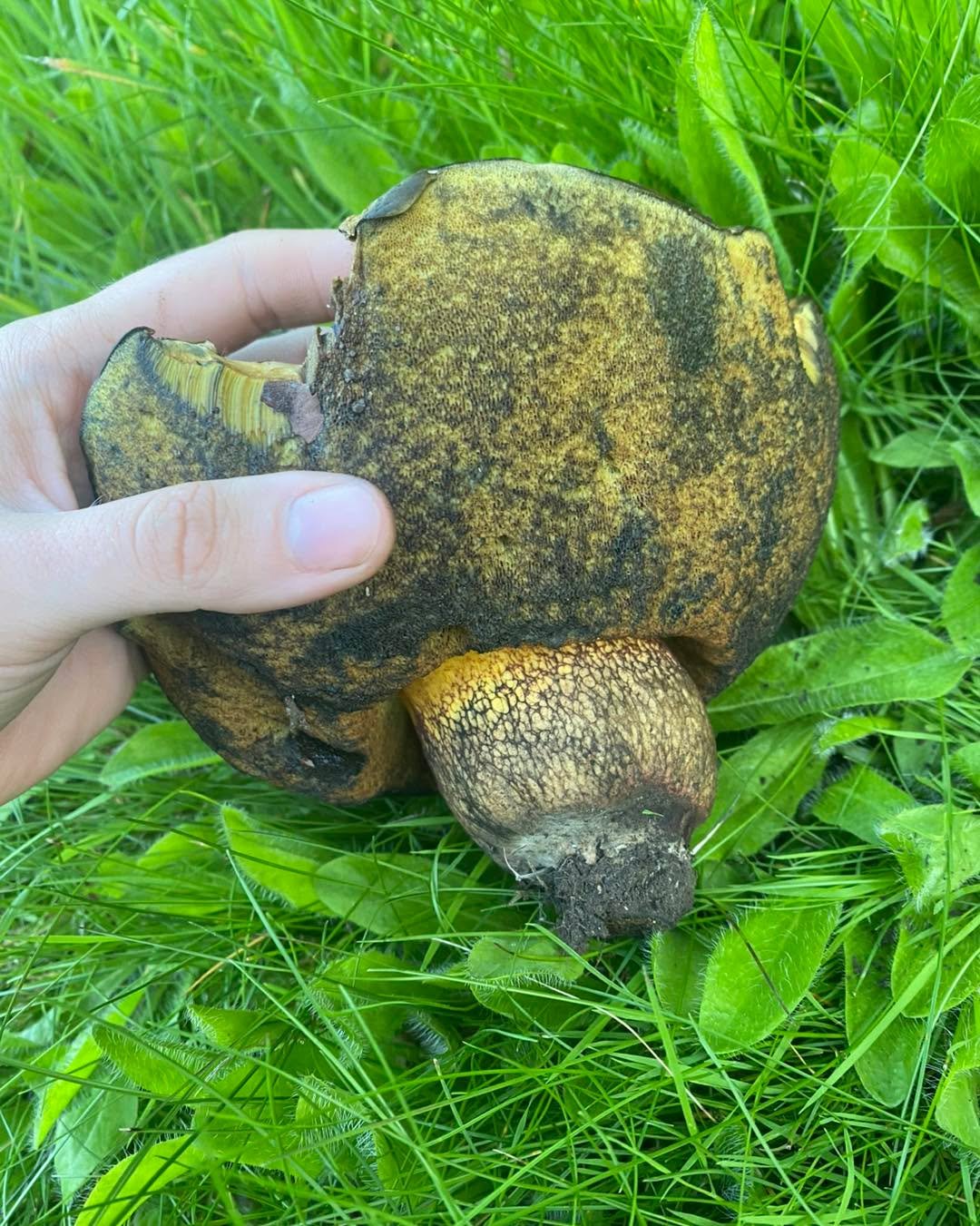
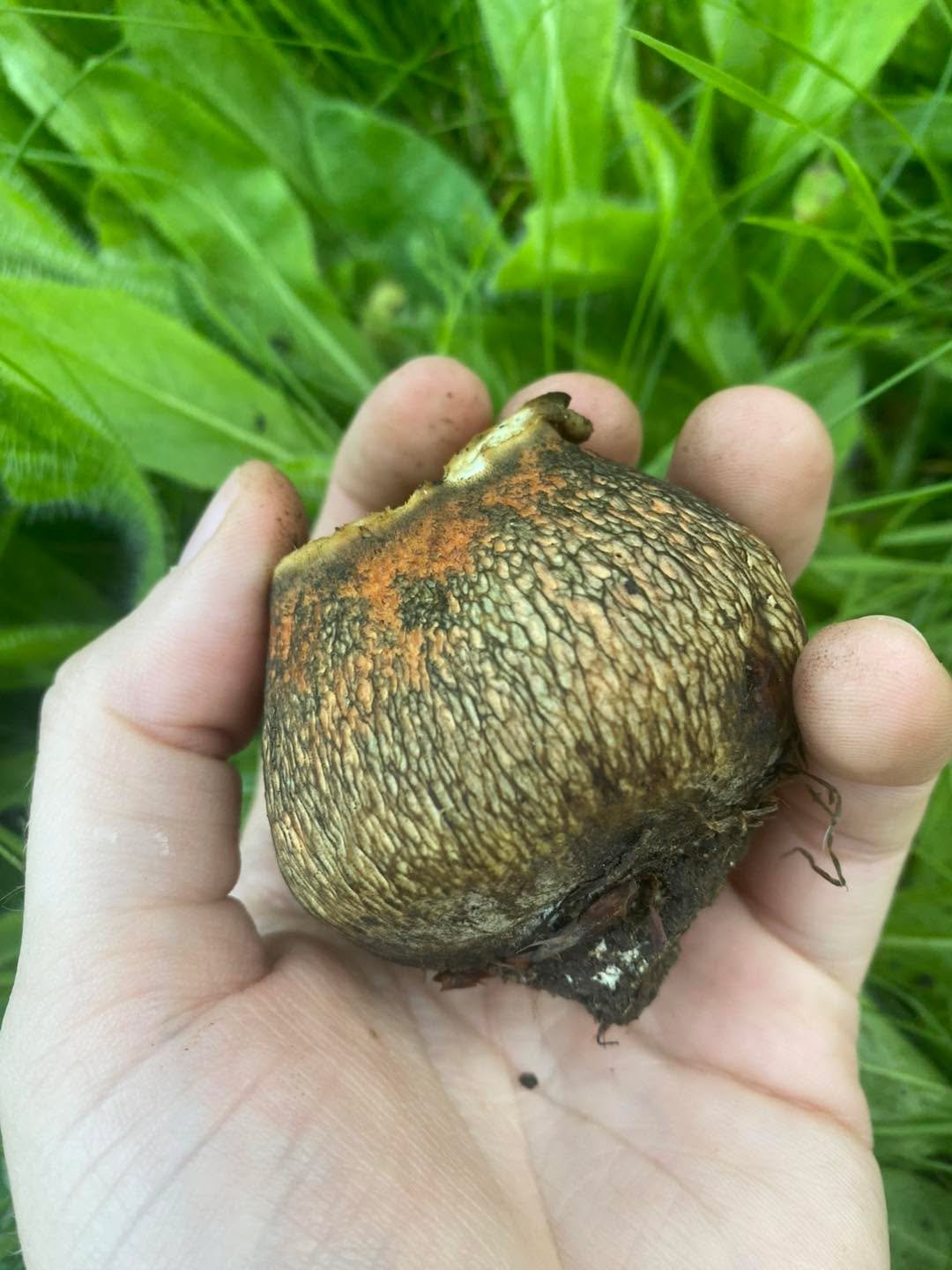
Olive toned brown cap, often with a pink hue to the edge. Can get quite dingy and darken up once knocked around.
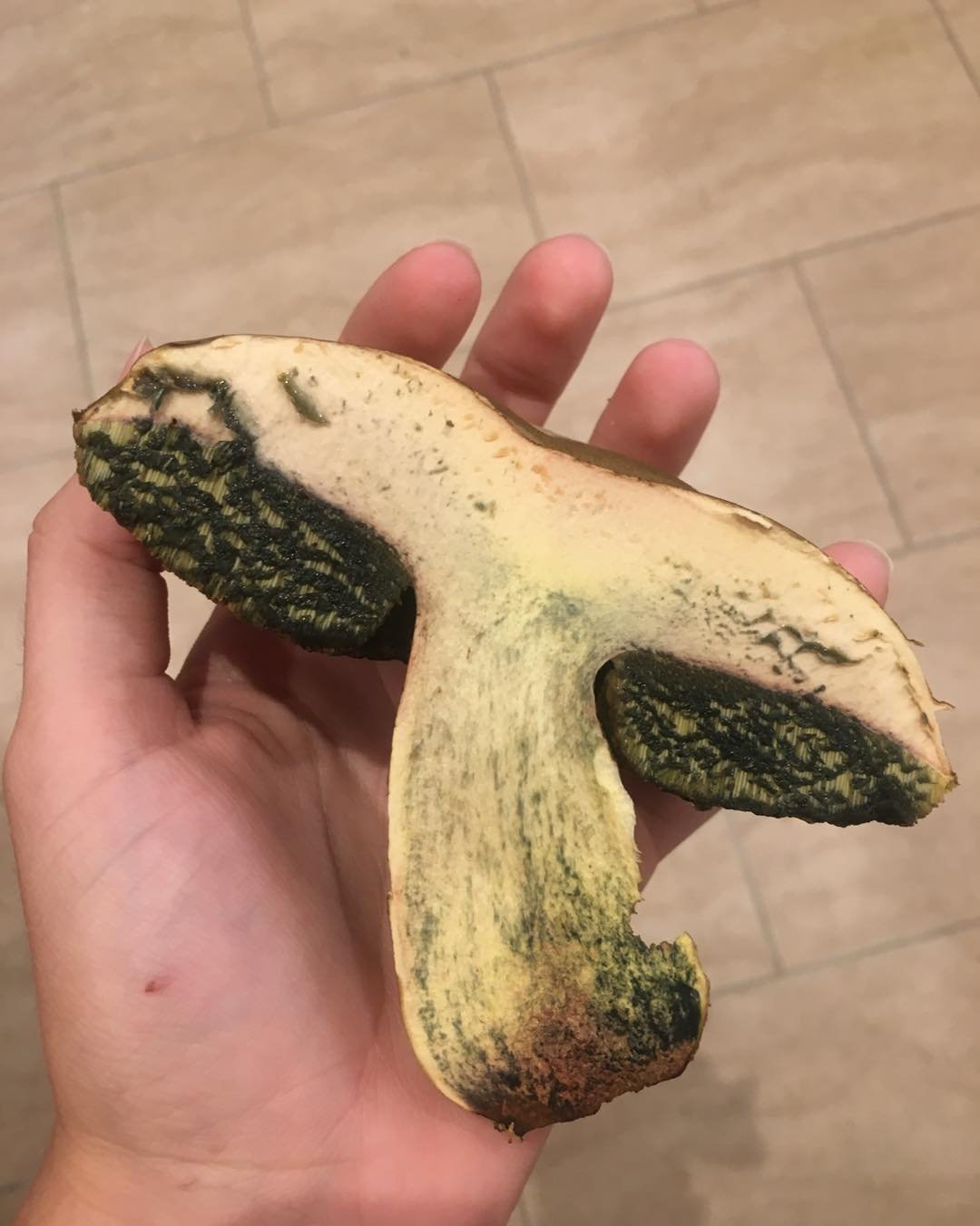
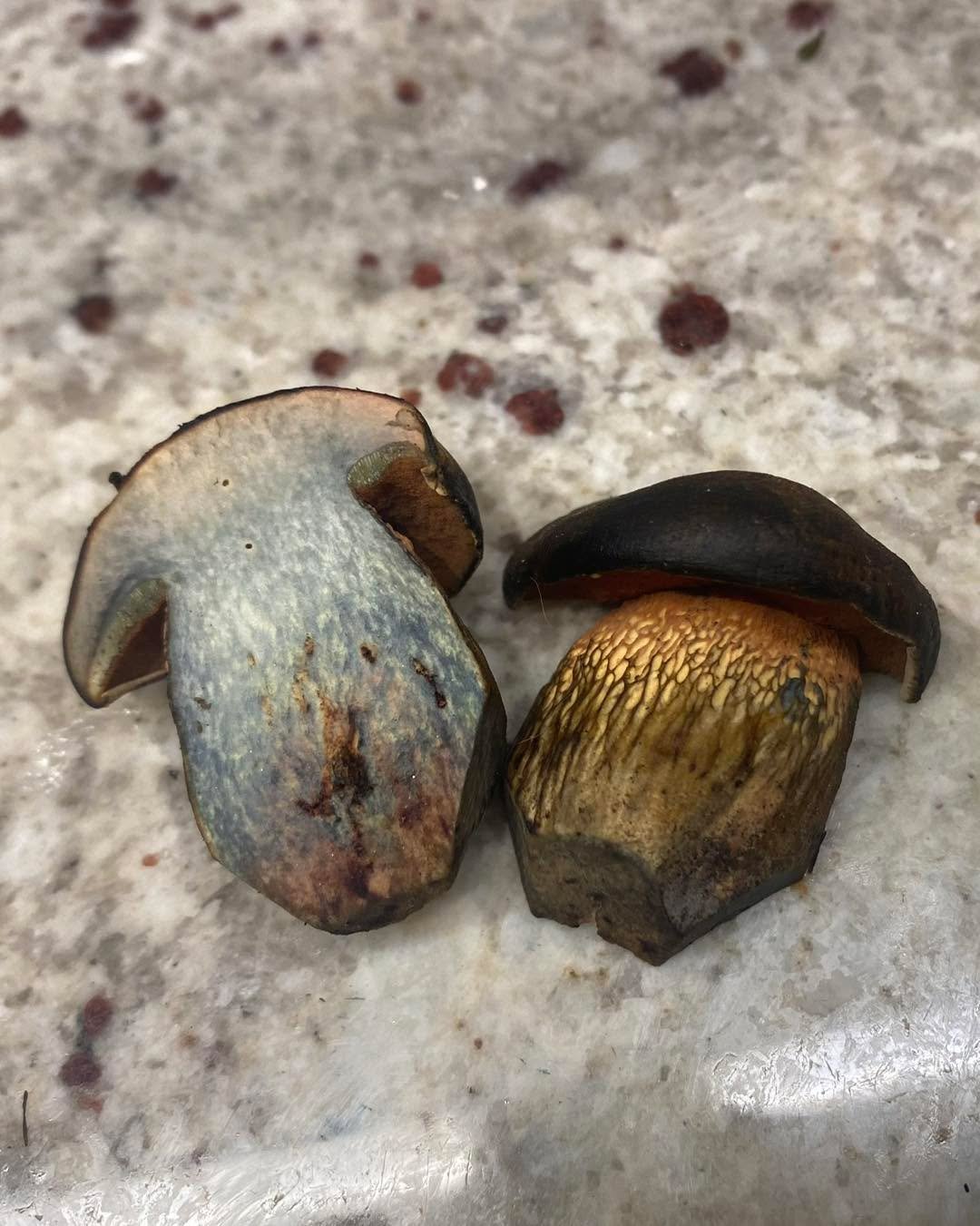
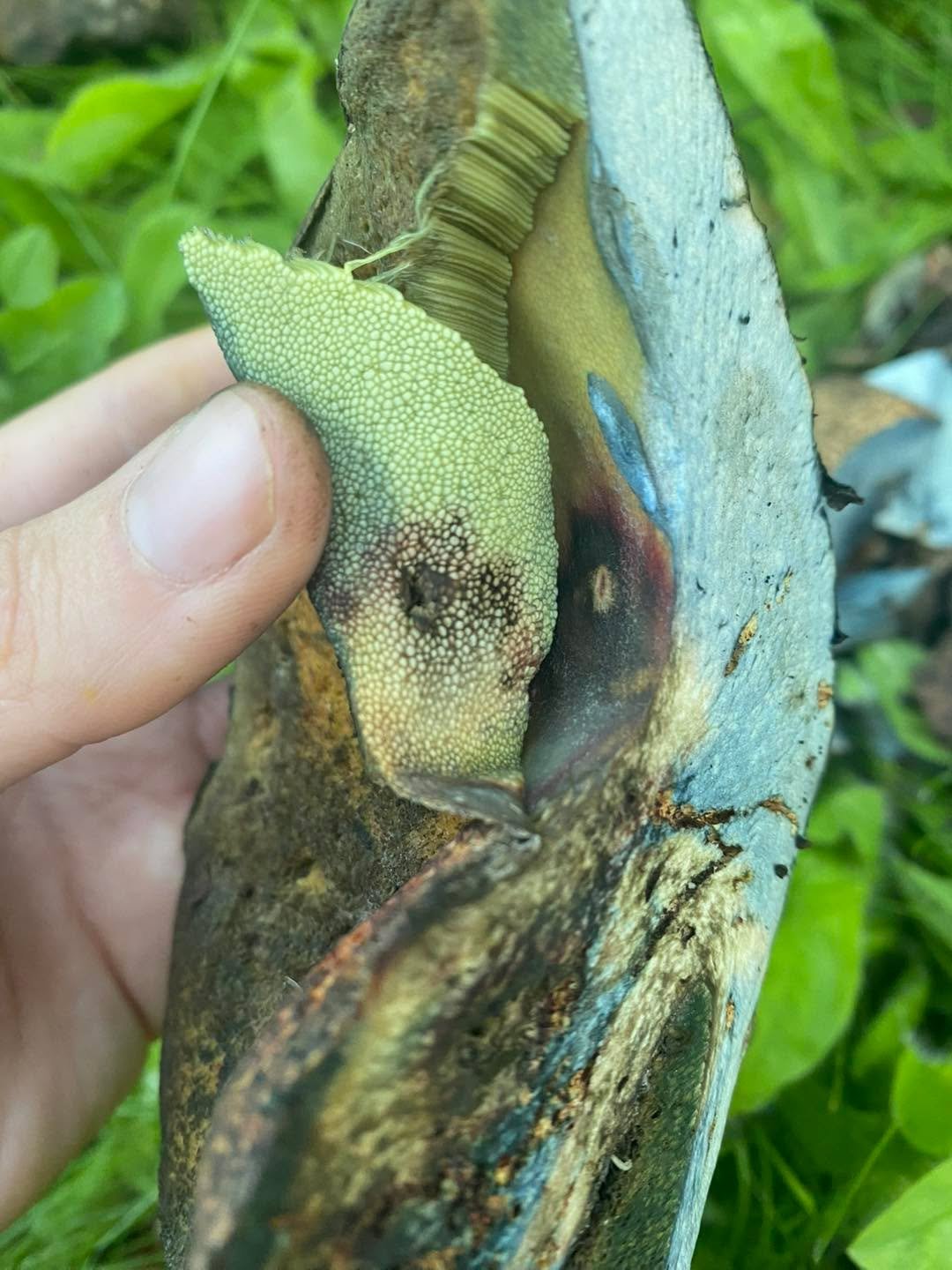
Pores ranging from yellow to deep orange, sometimes red.
Reticulation (netting) on the stipe, orange to wine red coloured but can bruise darker.
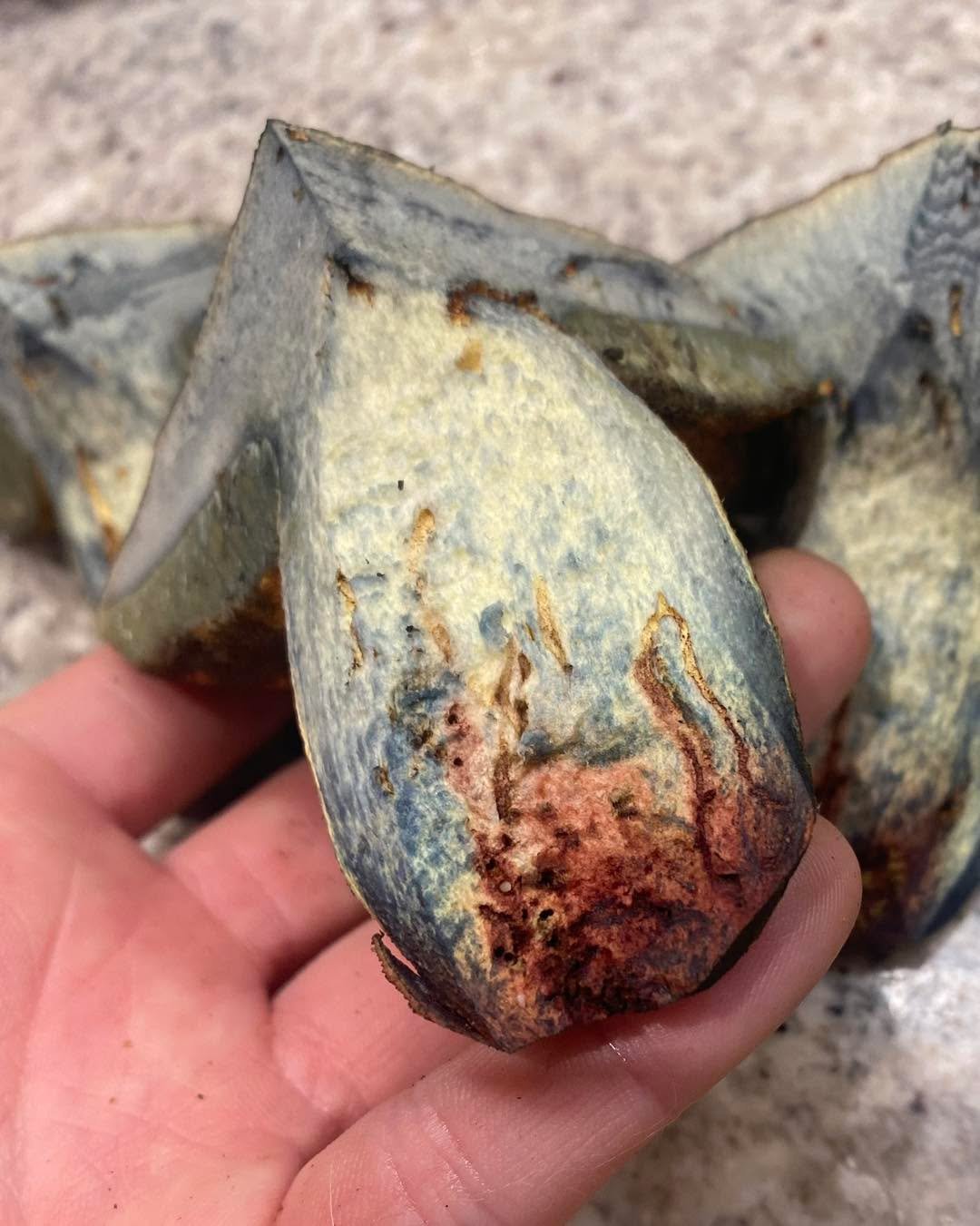
Typical Suillellus staining - blue with vinaceous red at base.
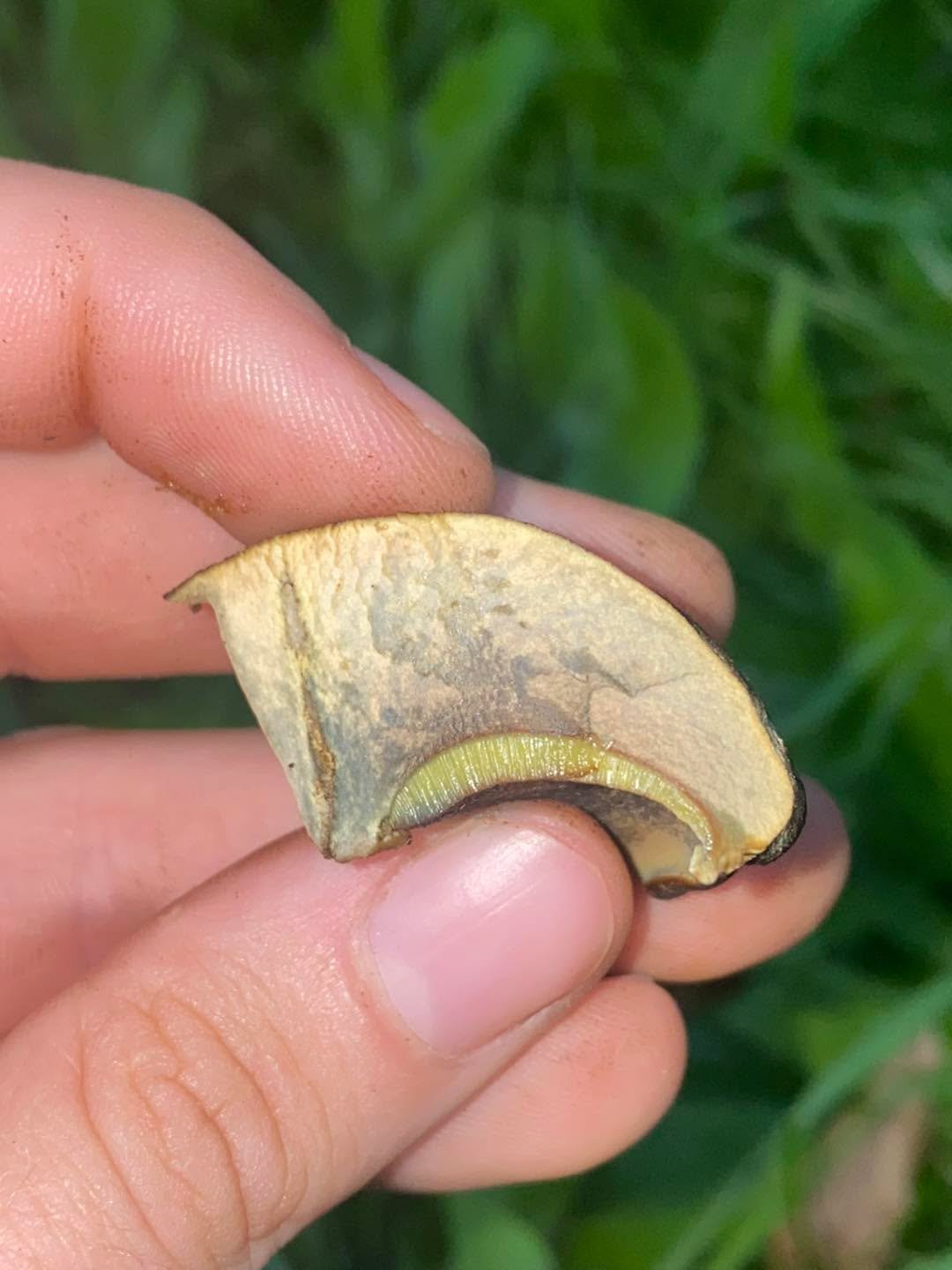
Sometimes Bataille’s line above the pores - this is a vinaceous red line that appears when cut, but can be overcome by blue quickly and is sometimes hard to see. Peeling the pores back can also show this. This is a great indicator of Suillellus, however, it is not always present.
Found with a variety of trees and quite widespread.
Edibility: edible, and pretty well rated, however it should be very well cooked - 20m+ is recommended.
Lookalikes:
Suillellus mendax - a very similar sibling species that can be hard to distinguish by eye. These tend to be much brighter colours and deeper red. Typically less reticulation (minimal to none over the top half of the stipe), with the bottom covered in dotting.
Suillellus queletii (deceiving bolete) - very variable and with the same blue staining and red in the base, but the cap is often more orange-red, and the stipe is yellow with slight dotting rather than reticulation.
Neoboletus species (scarletina) - this genus is also blue staining boletes, but the stipe is dotted rather than reticulated, cap is a darker brown, and usually more red. Rarely but can stain red in the base. Also should be well cooked.
Caloboletus calopus (bitter beech bolete) - white capped, yellow pores, blue staining, and a reticulated stem coloured yellow down to red at the base.
Rubroboletus species (satans and others) - this genus is GI toxic, but they are rare and thermophilic so mostly found down south in warmer weather. They typically have a chalky white based cap, very fine red reticulation, red pores, and stain blue mainly in the cap.